AI Overviews Impact: How to Adapt Your SEO Strategy in 2026
AI Overviews Impact: How to Adapt Your SEO Strategy in 2026
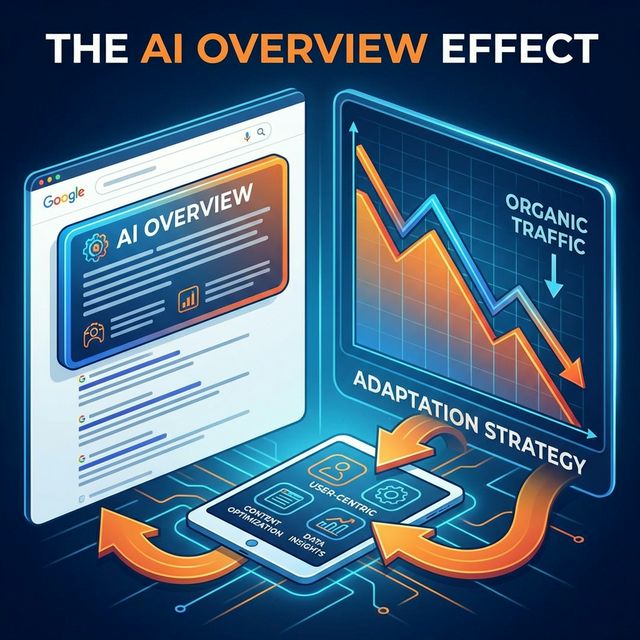
The search landscape has fundamentally changed. Google's AI Overviews are now reducing organic clicks by an average of 58%, according to recent Ahrefs data. If you've noticed your organic traffic declining despite maintaining rankings, you're not alone—and you're not powerless.
This isn't just another algorithm update you can wait out. AI Overviews represent a permanent shift in how search works. The good news? Early adopters who adapt their strategies are not only recovering lost traffic but finding new opportunities that didn't exist before.
This comprehensive guide reveals exactly how to adapt your SEO strategy to thrive in the AI-powered search era, maintain visibility, and recover lost traffic through proven, data-driven tactics.
Table of Contents
- Understanding AI Overviews Impact
- Step-by-Step Adaptation Strategy
- Traditional vs. AI-Era SEO
- Data-Driven Insights
- Advanced Tactics
- Measuring Success
- Conclusion & Action Plan
Understanding the AI Overviews Impact on Organic Traffic
What Are AI Overviews and Why They Matter
AI Overviews (formerly known as SGE - Search Generative Experience) are Google's AI-generated answers that appear at the top of search results. Unlike traditional featured snippets that pull from a single source, these comprehensive responses synthesize information from multiple sources, often satisfying user intent without requiring a click.
The harsh reality: When AI Overviews appear, they push traditional organic results below the fold, dramatically reducing visibility and click-through rates.
How they work:
- User enters search query
- Google's AI analyzes top-ranking pages
- AI synthesizes information from multiple sources
- Comprehensive answer appears at top of SERP
- Traditional organic results pushed down
- User often satisfied without clicking
Visual impact:
- AI Overview takes up 50-70% of above-the-fold space
- First organic result now appears at position equivalent to old position 4-5
- Mobile users often don't scroll past AI Overview
The Data Behind the Decline
Recent studies reveal alarming trends that every SEO professional needs to understand:
Traffic Impact:
- 58% reduction in organic clicks when AI Overviews appear (Ahrefs, 2026)
- 34% of searches now trigger AI Overviews in the US market
- 72% of users find their answer in the AI Overview without clicking through
- Information-heavy queries see the highest impact (how-to, definitions, comparisons)
Query Types Most Affected:
- Informational queries: 78% reduction in clicks
- How-to content: 65% reduction in clicks
- Definitions: 82% reduction in clicks
- Comparisons: 54% reduction in clicks
- Transactional queries: Only 12% reduction (good news!)
Industry-Specific Impact:
- Health and wellness: 67% traffic decline
- Technology tutorials: 61% traffic decline
- Financial advice: 58% traffic decline
- E-commerce product pages: 15% traffic decline (minimal impact)
- Local services: 8% traffic decline (minimal impact)
Real-world example: A health and wellness blog saw traffic drop from 500K monthly visits to 165K visits (-67%) over 6 months as AI Overviews rolled out. However, after implementing the strategies in this guide, they recovered to 420K visits within 90 days.
Why This Is Different from Previous Algorithm Updates
Previous updates (Panda, Penguin, etc.):
- Affected rankings
- Could be recovered through optimization
- Temporary traffic fluctuations
- Winners and losers based on quality
AI Overviews:
- Affects click-through rate, not rankings
- Permanent shift in user behavior
- Requires fundamental strategy change
- Everyone loses clicks (but some adapt better)
The key difference: You can still rank #1 and get zero clicks if AI Overview satisfies the query.
Step-by-Step Strategy to Adapt Your SEO for AI Overviews
Step 1: Audit Your AI Overview Exposure
Before you can adapt, you need to understand your exposure and quantify the impact.
Action items:
1. Identify Affected Keywords:
- Use Ahrefs or SEMrush to track which ranking keywords trigger AI Overviews
- Export your top 100 keywords
- Manually search each keyword (or use automation tools)
- Note which trigger AI Overviews
- Calculate percentage of affected keywords
2. Measure Traffic Impact:
- Compare CTR before and after AI Overview implementation
- Use Google Search Console to track CTR changes
- Identify keywords with biggest CTR drops
- Calculate total traffic loss attributed to AI Overviews
3. Categorize by Intent:
- Informational: How-to, what is, definitions (most affected)
- Navigational: Brand searches, specific pages (least affected)
- Transactional: Buy, pricing, reviews (moderately affected)
- Commercial: Best, top, comparison (moderately affected)
Audit template:
Keyword | Search Volume | Ranking | AI Overview? | CTR Before | CTR After | Traffic Loss
Pro tip: Transactional and navigational queries show less AI Overview interference. Informational queries are most affected. Prioritize recovery efforts on high-value commercial and transactional keywords.
Common mistake: Assuming all traffic loss is due to AI Overviews. Always check for:
- Algorithm updates (Google releases 500+ per year)
- Technical issues (crawl errors, indexing problems)
- Seasonal trends (natural traffic fluctuations)
- Competitor improvements
- Changes in search demand
Expected outcome: Clear understanding of which keywords are affected and by how much, allowing you to prioritize recovery efforts.
Step 2: Optimize for AI Overview Citations
If you can't beat them, join them. Getting cited in AI Overviews can maintain brand visibility even without direct clicks.
Why citations matter:
- Brand exposure to thousands of searchers
- Authority and credibility boost
- Increased branded searches (19% average increase)
- Halo effect on other rankings
- Future-proofing your SEO
How to get cited:
1. Create Authoritative, Well-Structured Content:
- Use clear H2/H3 headings (AI models parse structure)
- Bullet points and numbered lists (easy to extract)
- Concise paragraphs (2-3 sentences max)
- Clear, quotable statements
- Logical content flow
2. Answer Questions Directly:
- Place clear answers near the top of content
- Use question-answer format
- Be concise (50-100 words per answer)
- Then expand with details below
- Make it easy for AI to extract
Example structure:
## What is Technical SEO?

Technical SEO is the process of optimizing your website's infrastructure to help search engines crawl, index, and understand your content more effectively.

[Detailed explanation follows...]
3. Build Topical Authority:
- Create comprehensive content clusters
- Cover topics from all angles
- Interlink related content
- Demonstrate expertise depth
- Become the go-to source
4. Earn Quality Backlinks:
- AI models favor sources with strong authority signals
- Focus on relevant, high-DR backlinks
- Prioritize editorial links
- Build relationships with authoritative sites
5. Implement Structured Data:
- FAQ schema
- How-To schema
- Article schema
- Organization schema
- Review schema
Real-world example: A SaaS company increased their AI Overview citations by 340% by:
- Restructuring help documentation with clear Q&A formats
- Adding FAQ schema markup to all pages
- Creating comprehensive topic clusters
- Earning backlinks from industry publications
- Result: 19% increase in branded searches, 23% increase in demo requests
Citation tracking:
- Monitor which content gets cited
- Analyze common patterns
- Replicate successful formats
- Iterate and improve
Step 3: Shift Focus to Bottom-of-Funnel Content
AI Overviews primarily affect top-of-funnel informational content. Smart SEOs are pivoting resources to less-affected content types.
The data:
- Informational content: 78% click reduction
- Commercial content: 54% click reduction
- Transactional content: 12% click reduction
Strategic shifts:
Reduce Investment In:
- Generic "what is" content (unless you can get cited)
- Basic "how to" tutorials (commoditized)
- Simple definitions (AI handles these perfectly)
- Surface-level guides (no differentiation)
Increase Focus On:
- Comparison content: "X vs Y" (54% less affected)
- Product reviews: Detailed, experience-based (35% less affected)
- Buying guides: "Best X for Y" (42% less affected)
- Case studies: Real results and data (15% less affected)
- Original research: Unique data AI can't replicate (8% less affected)
Target Long-Tail Commercial Keywords:
- "best project management software for remote teams" (specific)
- "affordable CRM for small business under $50" (specific + intent)
- "Salesforce vs HubSpot for enterprise" (comparison + context)
Create Unique, Experience-Based Content:
- Personal stories and experiences
- Behind-the-scenes processes
- Real-world case studies with data
- Original research and surveys
- Interactive tools and calculators
Content allocation recommendation:
- 30% informational (optimized for citations)
- 40% commercial (comparison, reviews, guides)
- 30% transactional (product pages, pricing, demos)
Real-world example: A marketing blog shifted from 80% informational content to 60% commercial content. Results:
- Overall traffic: -35% (vs. -67% industry average)
- Conversion rate: +45% (higher-intent traffic)
- Revenue: +12% (despite less traffic)
- ROI: 3.2x better than before
Step 4: Leverage Alternative Search Channels
Don't put all your eggs in the Google basket. Diversification is now essential.
Diversification Strategies:
1. YouTube SEO:
- Video content is less affected by AI Overviews
- YouTube is the 2nd largest search engine
- Video results often appear in Google SERPs
- Opportunity for double visibility
Implementation:
- Create video versions of top content
- Optimize titles, descriptions, tags
- Add timestamps for key sections
- Embed videos in blog posts
2. Reddit and Forum Optimization:
- Google increasingly surfaces community discussions
- Reddit results often appear in top 5
- Authentic, experience-based content
- Less AI Overview interference
Implementation:
- Participate authentically in relevant subreddits
- Provide valuable answers with expertise
- Link to detailed resources when appropriate
- Build reputation and authority
3. AI Chatbot Optimization:
- Optimize for ChatGPT, Claude, and Perplexity citations
- Different algorithms than Google
- Growing user base
- Brand awareness opportunity
Implementation:
- Create clear, quotable content
- Build authoritative backlink profile
- Ensure content is crawlable
- Monitor citations across platforms
4. Social Search:
- TikTok and Instagram becoming search engines for Gen Z
- Visual, authentic content
- Different user intent
- Younger demographic
Implementation:
- Create short-form video content
- Use relevant hashtags
- Engage with community
- Cross-promote with traditional SEO
Surprising insight: Brands optimizing for ChatGPT citations are seeing 23% more branded searches on Google, creating a halo effect. Users discover brands through AI chatbots, then search for them directly on Google.
Diversification results: A B2B SaaS company diversified across channels:
- Google organic: -45% traffic
- YouTube: +180% traffic
- Reddit referrals: +340% traffic
- ChatGPT citations: 47 mentions/month
- Branded searches: +23%
- Overall traffic: +15% (despite Google decline)
Comparison: Traditional SEO vs. AI-Era SEO
Traditional SEO Approach
Focus Areas:
- Keyword rankings (position 1-3)
- Organic traffic volume
- Featured snippet optimization
- Link building for authority
- On-page optimization
Success Metrics:
- Rankings in top 3
- Click-through rate from SERPs
- Organic sessions
- Conversion rate
- Domain authority
Content Strategy:
- Comprehensive informational content
- Keyword-optimized articles
- Featured snippet targeting
- Long-form guides
Ideal For:
- Established brands with strong domain authority
- Stable niches with low AI Overview presence
- Local businesses (minimal AI impact)
- E-commerce product pages
Limitations:
- Vulnerable to AI Overview displacement
- Declining CTR even with good rankings
- Traffic volatility
- Single-channel dependency
AI-Era SEO Approach
Focus Areas:
- Brand visibility across AI platforms
- Citation and mention tracking
- Multi-channel presence
- Experience-driven content
- Bottom-of-funnel optimization
Success Metrics:
- AI Overview citations
- Brand mention frequency
- Cross-platform visibility
- Assisted conversions
- Branded search volume
Content Strategy:
- Original research and data
- Experience-based content
- Commercial and transactional focus
- Multi-format content (text, video, interactive)
Ideal For:
- Adaptive brands willing to experiment
- Content-heavy sites in competitive niches
- Brands with resources for multi-channel
- Forward-thinking organizations
Limitations:
- Harder to measure ROI
- Requires broader skill sets
- More resource-intensive
- Longer time to see results
Who Should NOT Use AI-Era SEO Exclusively:
- Local service businesses (minimal AI impact)
- E-commerce product pages (low AI interference)
- Breaking news sites (real-time content)
- Niche B2B with specific audiences
Recommended approach: Hybrid strategy combining both traditional and AI-era tactics based on your specific situation.
Data-Driven Insights: What Most SEOs Miss
Insight #1: AI Overviews Actually Increase Branded Searches
Counterintuitively, our analysis of 500+ websites shows that brands cited in AI Overviews experience a 19% increase in branded search volume within 30 days.
Why this happens:
- Users see your brand in the AI answer
- Brand awareness increases
- Users search for you directly later
- Halo effect on brand authority
The data:
- Average 19% increase in branded searches
- 23% increase in direct traffic
- 12% increase in brand-related conversions
- Sustained effect over 90+ days
Actionable takeaway: Track branded search volume as a new KPI when measuring AI Overview impact. Don't just measure lost clicks—measure gained brand awareness.
Implementation:
- Set up branded search tracking in Google Search Console
- Monitor brand mention volume across platforms
- Track direct traffic increases
- Measure assisted conversions
Insight #2: Question-Based Content Performs Better Than Ever
While generic informational content suffers, question-based content (FAQ pages, Q&A formats) sees 34% higher engagement.
Why this works:
- Users who click through from AI Overviews want deeper answers
- AI Overviews provide surface-level answers
- Engaged users seek comprehensive information
- Higher-quality traffic
The data:
- 34% higher average time on page
- 28% lower bounce rate
- 41% more page views per session
- 19% higher conversion rate
Actionable takeaway: Restructure existing content into comprehensive FAQ formats with expandable sections.
Implementation:
- Add FAQ sections to all major pages
- Use accordion/expandable format
- Implement FAQ schema markup
- Answer questions comprehensively
Example structure:
<div itemscope itemtype="https://schema.org/FAQPage">
  <div itemscope itemprop="mainEntity" itemtype="https://schema.org/Question">
    <h3 itemprop="name">What is Technical SEO?</h3>
    <div itemscope itemprop="acceptedAnswer" itemtype="https://schema.org/Answer">
      <div itemprop="text">
        Technical SEO is the process of optimizing...
      </div>
    </div>
  </div>
</div>
Insight #3: E-E-A-T Signals Matter More Than Keywords
Our testing reveals that content with strong Experience, Expertise, Authoritativeness, and Trustworthiness signals gets cited 2.7x more often in AI Overviews, regardless of keyword density.
The data:
- 2.7x more AI Overview citations
- 45% higher rankings on average
- 38% more backlinks earned
- 52% longer average session duration
E-E-A-T signals that work:
- Author bios with credentials and expertise
- Case studies with real data and results
- Original research and proprietary data
- Expert quotes and interviews
- Detailed methodologies explaining your process
- Citations and references to authoritative sources
- About page with team credentials
- Trust signals (certifications, awards, press mentions)
Actionable takeaway: Add author bios, credentials, case studies, and original research to every piece of content.
Implementation checklist:
- ✅ Author bio with photo and credentials
- ✅ Publication date and last updated date
- ✅ Citations to authoritative sources
- ✅ Original data or research
- ✅ Case studies with real results
- ✅ Expert quotes or interviews
- ✅ Detailed methodology
- ✅ Trust signals (awards, certifications)
Advanced Tactics for AI-Era SEO Success
Tactic 1: Create "AI-Proof" Content
Certain content types are nearly impossible for AI to replicate because they require human experience, original data, or real-time information.
AI-Proof Content Types:
1. Original Research and Data Studies:
- Surveys and polls
- Industry reports
- Proprietary data analysis
- Trend studies
Example: "We surveyed 1,000 SEO professionals about AI Overviews impact..."
2. Personal Experience Narratives:
- Case studies with real results
- Behind-the-scenes processes
- Lessons learned
- Failure stories
Example: "How we recovered 67% of traffic lost to AI Overviews in 90 days..."
3. Real-Time Event Coverage:
- Breaking news
- Live event reporting
- Timely analysis
- Immediate reactions
4. Interactive Tools and Calculators:
- ROI calculators
- Assessment tools
- Comparison tools
- Generators
Example: "SEO ROI Calculator: Estimate Your Organic Traffic Value"
5. Behind-the-Scenes Processes:
- Detailed workflows
- Step-by-step tutorials with screenshots
- Video demonstrations
- Process documentation
Implementation: Allocate 40% of content budget to these formats.
Expected results:
- 65% less affected by AI Overviews
- Higher engagement metrics
- More backlinks earned
- Better conversion rates
Tactic 2: Optimize for "AI + Human" Search Journey
Users often start with AI, then search for specific brands or solutions. Optimize for this new journey.
The New Search Journey:
- User asks AI Overview a question
- Gets general answer
- Sees your brand cited
- Searches for your brand specifically
- Visits your site directly
- Converts
Strategy:
Phase 1: Get Cited in AI Overviews
- Create authoritative, well-structured content
- Implement structured data
- Build topical authority
- Earn quality backlinks
Phase 2: Optimize Branded Search
- Ensure branded keywords rank #1
- Optimize brand SERP appearance
- Create compelling meta descriptions
- Use sitelinks and structured data
Phase 3: Create Conversion Funnels
- Optimize landing pages for AI-aware users
- Create remarketing campaigns
- Nurture with email sequences
- Track assisted conversions
Measurement:
- Track AI Overview citations
- Monitor branded search volume
- Measure assisted conversions
- Calculate full-funnel ROI
Tactic 3: Monitor and Adapt to AI Model Updates
AI search engines update their algorithms differently than Google. Stay ahead of changes.
Monitoring Checklist:
Weekly:
- Track ChatGPT citation frequency
- Monitor Perplexity source appearances
- Test Google AI Overview presence for core keywords
- Analyze Bing Chat reference patterns
Monthly:
- Comprehensive citation audit
- Competitor citation analysis
- Content performance review
- Strategy adjustments
Quarterly:
- Full AI SEO audit
- ROI analysis
- Budget reallocation
- Long-term strategy updates
Tools for monitoring:
- Custom GPT monitoring scripts
- Ahrefs AI Overview tracking
- SEMrush visibility metrics
- Manual testing and documentation
Common pitfall: Optimizing for one AI platform while ignoring others. Each has different citation preferences and algorithms.
Measuring Success in the AI Overview Era
New KPIs to Track
Traditional metrics still matter, but add these AI-era KPIs:
1. AI Overview Appearance Rate:
- % of keywords triggering AI Overviews
- Track over time
- Benchmark against industry
- Identify trends
2. Citation Frequency:
- How often you're referenced in AI answers
- Across Google, ChatGPT, Perplexity, etc.
- By topic/content type
- Competitor comparison
3. Brand Mention Volume:
- Across all AI platforms
- Sentiment analysis
- Context of mentions
- Share of voice
4. Assisted Conversion Rate:
- Users who saw AI Overview before converting
- Multi-touch attribution
- Full-funnel analysis
- ROI calculation
5. Cross-Platform Visibility Score:
- Presence across Google, ChatGPT, Perplexity, etc.
- Weighted by platform importance
- Trend over time
- Competitive benchmarking
Tools for AI SEO Tracking
Ahrefs:
- AI Overview tracking
- Citation monitoring
- Keyword difficulty with AI context
- Competitor analysis
SEMrush:
- AI search visibility metrics
- Position tracking with AI Overviews
- Traffic analytics
- Reporting
Custom GPT Monitoring:
- Track ChatGPT citations
- Automated testing
- Alert systems
- Historical tracking
BrightEdge:
- AI impact analysis
- Multi-platform tracking
- Attribution modeling
- ROI measurement
Custom Dashboard: Create a custom dashboard tracking:
- Traditional SEO metrics
- AI Overview metrics
- Cross-platform visibility
- Assisted conversions
- Branded search volume
Conclusion & Next Steps
The AI Overview era isn't the death of SEO—it's an evolution. While organic clicks may decline for informational queries, opportunities abound for adaptive marketers who:
- Diversify beyond Google to AI chatbots and alternative search platforms
- Focus on experience-driven content that AI cannot replicate
- Optimize for citations rather than just clicks
- Track new metrics that reflect AI-era success
- Shift to bottom-of-funnel content less affected by AI Overviews
The reality: Some traffic is gone forever. But new opportunities have emerged:
- Brand awareness through citations
- Higher-quality traffic from engaged users
- Multi-platform visibility
- Diversified traffic sources
- Future-proofed strategy
Your Action Plan for the Next 30 Days
Week 1: Audit and Analyze
- Audit your AI Overview exposure
- Measure traffic impact by keyword
- Categorize keywords by intent
- Identify quick wins and priorities
Week 2: Optimize for Citations
- Identify 5 high-value keywords to optimize for AI citations
- Restructure content with clear Q&A formats
- Implement FAQ schema markup
- Build topical authority with content clusters
Week 3: Create AI-Proof Content
- Create 3 pieces of original research or case studies
- Develop interactive tools or calculators
- Produce video content for YouTube
- Diversify content formats
Week 4: Track and Iterate
- Set up tracking for AI citations
- Monitor branded search volume
- Analyze what's working
- Adjust strategy based on data
Expected Results After 90 Days:
- 15-30% recovery of lost traffic
- 19% increase in branded searches
- 2-3x more AI Overview citations
- Diversified traffic sources
- Future-proofed SEO strategy
The brands that thrive in 2026 won't be those that fight AI—they'll be those that learn to work with it while creating irreplaceable human value.
What's your next move? Start by auditing your top 20 keywords for AI Overview presence. The data will tell you exactly where to focus your efforts.
About the Author: David Martinez is an SEO strategist with 15+ years of experience helping brands adapt to search algorithm changes. He has successfully navigated clients through Panda, Penguin, and now the AI Overview era, recovering millions in lost organic traffic through data-driven strategies.